

Water main flushing

Flushing water mains
As part of the regular maintenance of our water distribution system and to ensure water is safe for drinking following repairs, we need to flush our water mains.
How does flushing work?
Water is drained from fire-hydrants – which are connected to our water distribution system – at high speeds out onto the street and into a storm drain. This high-speed water lifts and flushes sediment and mineral deposits from the pipes. It also removes any contaminants which may be present following a water main or service line repair.
Flushing can take anywhere from 20 minutes to several hours per pipe, depending on the size of the pipe and the amount of sediment that needs to be removed.
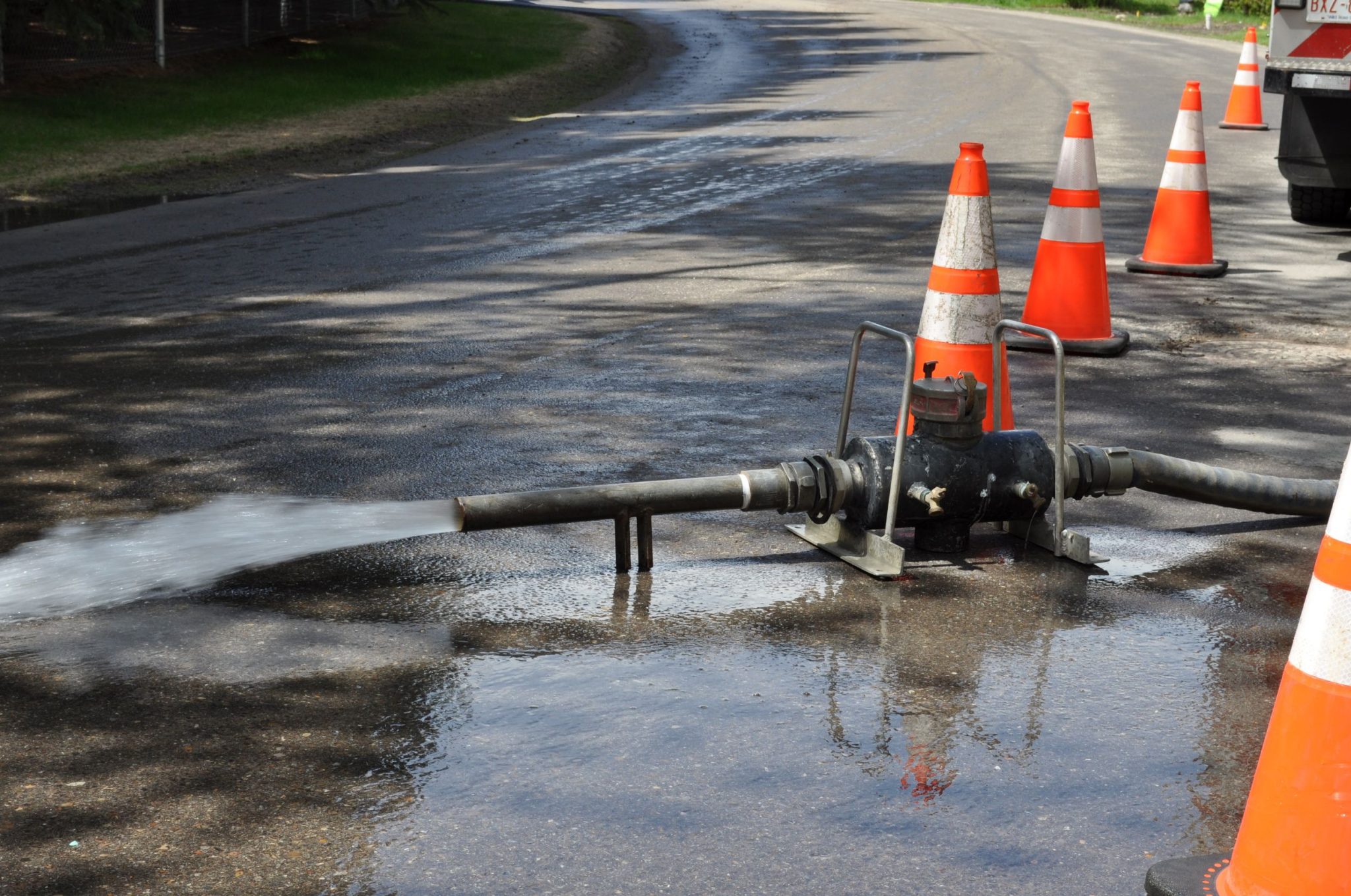
Water samples are taken and tested throughout this process to ensure water is safe for drinking.
Safe drinking water
While we are taking steps to reduce our water use wherever possible, we also need to make certain our drinking water meets regulatory standards for water quality and safety, and that our water distribution system is well maintained.
In the case of this program, we are using methods to reduce overall water volumes. For example, this type of flushing uses 40 per cent less water than traditional flushing methods. You can learn more about The City’s efforts to reduce water use across various programs and services by visiting calgary.ca/droughtinfo.
Flushing is necessary to ensure the safety of our water and the health of everyone who drinks it.
Frequently asked questions
Why does The City drain or flush water mains using fire hydrants?
All City fire hydrants are connected to the water distribution system. While hydrants are generally used for firefighting, they also provide access to our water mains and allow us to drain water from them under high pressure. That pressure is necessary to remove mineral deposits and sediment which have collected in those pipes.
Will this effect water service to my home?
If flushing is being done as part of our maintenance program you likely won’t see any changes to your water.
- Some homes might have a small drop in water pressure or discolouration in cold water, but this will resolve once flushing is complete.
- If you do experience a water disruption, please contact 311.
If flushing is being done following a water main or service line repair, your water will already be off. Once flushing is complete you water service will be restored and you should:
- Run your bathtub tap on cold for 10 minutes until water clears. Then run other cold water taps for five minutes or until clear.
- Wash tap aerators or screens in hot, soapy water, and disinfect them for 10 minutes in a solution of one part bleach to nine parts water.
- Disinfect water filters to manufacturer's recommendations.
If your water does not clear after running your taps, please contact 311.
Will this flood my street?
Large amounts of water will flow onto the street and down into stormwater catch basins. These are designed to handle such flow and street flooding should not occur.
On some streets, inlet control devices have been installed in catch basins to slow down stormwater and these may take longer to drain.
Does the water from fire hydrants have chlorine in it? Is that harmful to the environment?
We eliminate chlorine by flushing water through a dechlorinator as it leaves the fire hydrant.
Where does the water go? What about sediment and contaminants?
The water flows into storm catch basins, through the stormwater system, and eventually reaches the Elbow or Bow Rivers. When necessary, sediment control devices are used to prevent contaminants from entering storm drains.
Can you direct the water onto a lawn instead of down the storm drain?
Due to legal constraints about accessing private property, we cannot flush water onto a residential lawn, garden, or into a rain barrel.
How do you know the water is safe to drink after flushing is complete?
We use calibrated testing equipment in the field to measure chlorine and turbidity in our pipes. Additionally, we send water samples to our accredited laboratory, which are tested for basic water chemistry, inorganic substances, and contaminants to ensure the safety of our drinking water.
Can I park where this work is taking place?
Due to the high volume of water, there may be NO PARKING signs placed on your street during flushing. These are temporary.
Is it safe to play in this water?
No. There is a safety risk due to the volume of water. Please keep children away from all equipment, trucks and water.
I’m concerned that the water used during flushing is being wasted, especially when Stage 4 outdoor water restrictions are in place. Can you explain why it’s necessary?
As part of federally and provincially legislated water quality requirements, The City is required to maintain water quality after completing repairs.
- Flushing ensures high-quality drinking water and protects our water distribution system.
- Flushing must occur after a main is repaired so that any sediment and contaminants that may have entered the pipes are removed.
What is involved in the flushing process?
During flushing, water is drawn into the part of the system that was shut down for repairs, until the provincial requirements for clarity (very low sediment) and chlorine concentration are reached.
- Using fire hydrants to flush water mains is the only way to remove sediment from parts of Calgary's drinking water system that have been repaired.
- Flushing also ensures there is enough chlorine in the water to protect public health before a shutdown water main is returned to service.
- The City tests the water during flushing and only flush water mains until required sediment and chlorine levels are met.
- It takes anywhere from 20 minutes to several hours to complete flushing on the pipe, depending on the size of the pipe and the amount of sediment present.